Customized Refrigeration Solutions Efficiency Meets Innovation Since 1987 We Create Cooling Precise. Efficient. Future-proof.

Wine Cellar

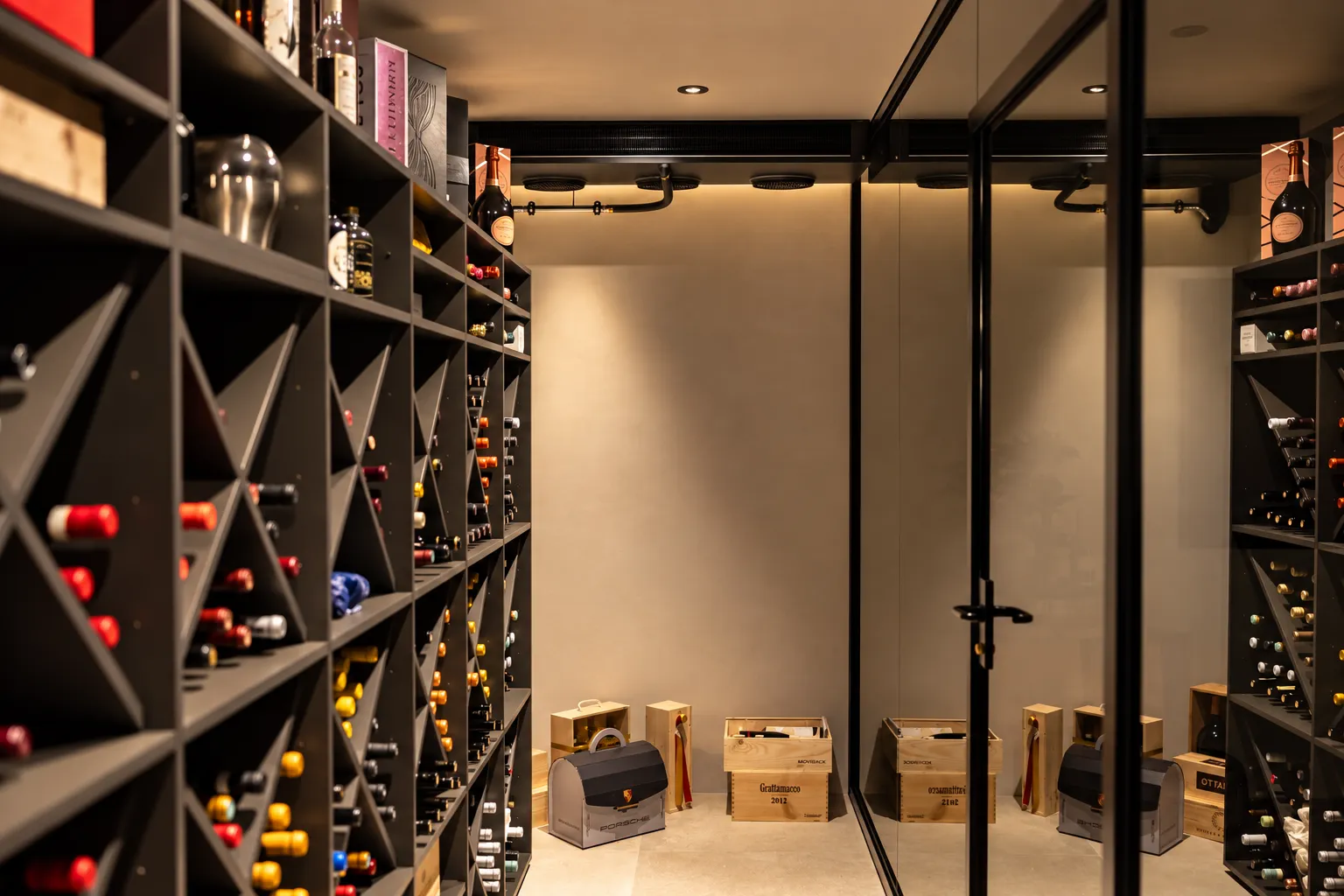
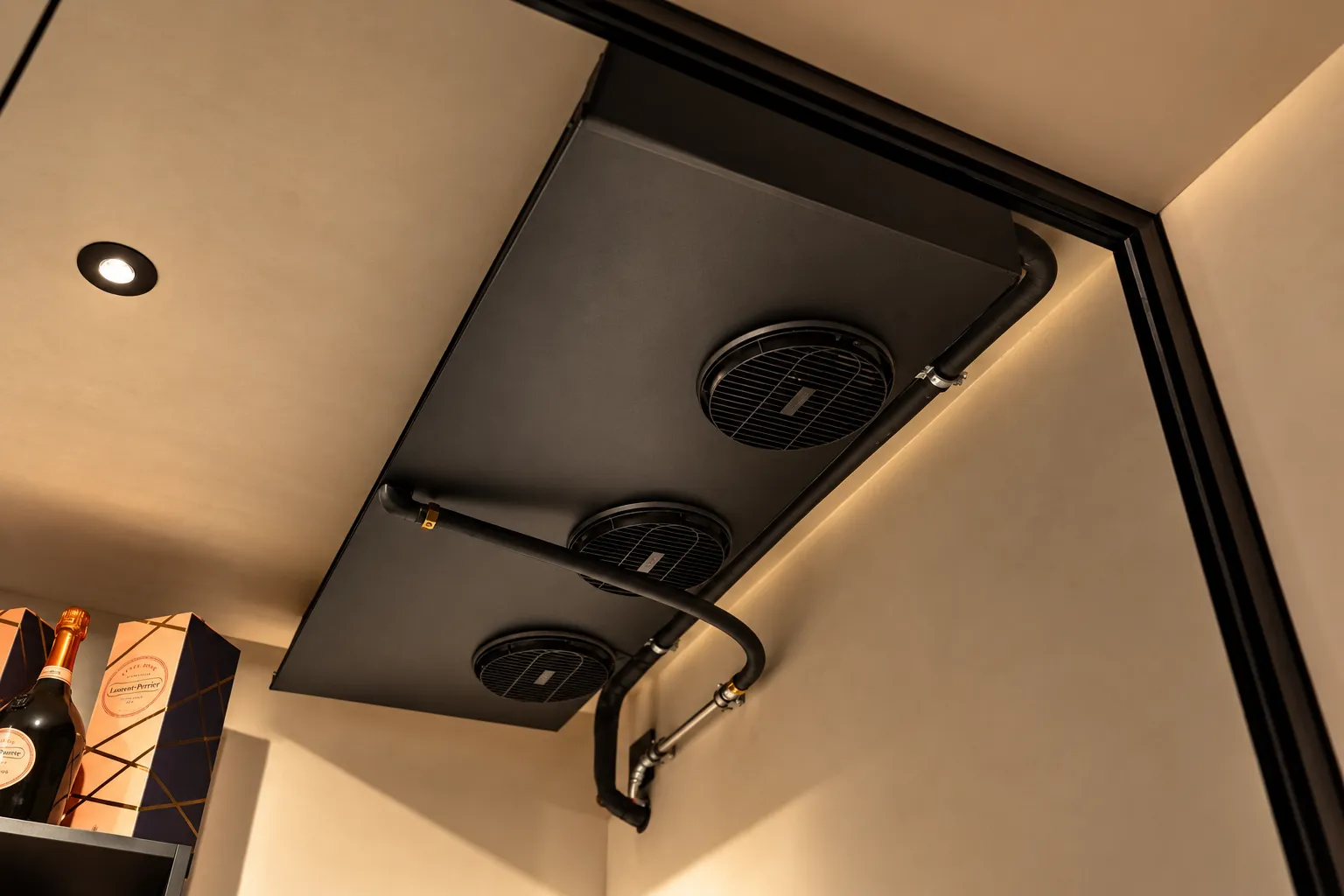
A wine cellar is more than just a storage room: it is the place where wine develops depth and character. For fine wines to reach their full potential, they need a precisely controlled climate with a constant temperature, appropriate humidity, and quiet. We design and install the cooling system for this purpose, from the evaporator on the ceiling to the chiller in the utility room.

Our wine cellars are custom-designed

Consistent temperatures, quiet operation, and a stylish design: We tailor every wine cooler to your space and your collection.
Private Wine Cellars
Restaurants and Hotels
Wine Shops and Tasting Rooms
Professional Wine Storage Facilities
Luxury Residences and Villas
A cellar for collecting valuable vintages
+41 26 505 11 55
Advantages

Cooling in the wine cellar, equipment in the adjacent room

In our wine cooling systems, the evaporator operates quietly and discreetly on the ceiling of the wine cellar. We install the cooling unit—which includes the compressor and condenser—in the utility room or an adjacent space. This ensures that noise, vibrations, and waste heat remain where they won’t disturb your wine. A digital controller maintains the desired temperature with precision and displays it at all times. We rely on proven brand-name components that are easy to maintain.

1 +
satisfied customers
Wine Climate Cabinet or Wine Cellar Cooling System

The Right Solution for Your Collection

For a small collection, a wine climate cabinet is often sufficient. However, if you want to control the temperature in a walk-in wine cellar, a wine room with a glass front, or a commercial storage room, you’ll need a permanently installed cooling system that’s tailored to the room’s size, insulation, and intended use.

In a split system, the evaporator is installed in the wine cellar and connected to the condenser unit in an adjacent room via refrigerant lines. This keeps the cellar quiet and saves space between the shelves. If no suitable adjacent room is available, we’ll work with you to explore other options.

The solution that's right for you depends on the space, the number of bottles, and your needs. We'll assess the situation on-site and recommend the option that makes the most sense in the long run.
FAQ

What is the ideal temperature for a wine cellar?
A temperature of 10 to 14 °C is considered ideal for storage. Even more important than the exact temperature is that it remains constant. Significant fluctuations are more harmful to the wine than a temperature that is one degree too high or too low.
Wine Climate Cabinet or Wine Cellar Cooling: What Do I Need?
A wine climate cabinet is suitable for smaller quantities. For a walk-in wine cellar, a wine room with a glass front, or commercial storage facilities, a permanently installed cooling system is the right choice.
Where is the cooling unit installed?
Usually in an adjacent utility room or side room. Refrigerant lines connect the unit to the evaporator on the ceiling of the wine cellar.
Can you hear the stereo in the wine cellar?
In the wine cellar, only the evaporator and its fans are running. The compressor and condenser—the noisiest components—are located outside. This keeps the cellar quiet.
Does my wine cellar need to be insulated?
Good insulation and doors that close tightly significantly reduce the need for cooling. We’ll assess the building’s condition during the inspection and advise you on where improvements would be worthwhile.
How can I request a wine cooler?
Simply contact us by phone or through the contact form. We'll schedule an on-site visit and then provide you with a quote.

From planning to commissioning, we're here to support you

Four Steps to Wine Cooling

Custom Wine Cooling
Get some advice!

FAQ: Your Questions, Our Answers

Everything You Need to Know About Our Wine Cooling Systems

What is the ideal humidity level for a wine cellar?

The ideal relative humidity is around 60 to 75 %. If the air is too dry, corks can dry out. If it is too humid, there is a risk of mold and labels peeling off.

How big does the cooling system for my wine cellar need to be?

That depends on the room's volume, insulation, glass surfaces, ambient temperature, and intended use. We calculate the required capacity for your room to ensure that the system is neither underpowered nor oversized.

Can a wine cabinet with a glass front also be refrigerated?

Yes. Glass surfaces allow more heat into the room, which is why we take them into account in our design. Insulated glazing significantly reduces the need for cooling.

Can I set the temperature myself?

Yes. Using the digital control, you can view the current temperature at any time and adjust the setpoint to your liking.

Can I store red and white wine in the same cellar?

Yes. The same temperature range is suitable for storing both. You can then bring them to the ideal drinking temperature by conditioning them before serving.

How long does the installation take?

The duration depends on the routing of the lines and the structural conditions. You will receive the exact schedule along with our quote.

Does a wine cooler require regular maintenance?

We recommend an annual service. During the service, we clean the condenser and evaporator, inspect the refrigeration circuit, and check the control system. This ensures that the system remains reliable and efficient.

What happens if the system malfunctions?

Please contact us immediately. We'll find a solution as quickly as possible to ensure your wine isn't damaged.

Can an existing wine cooler be replaced or upgraded?

Yes. We'll inspect your existing system and let you know whether it's worth repairing, upgrading, or replacing it.

How much do the energy costs for wine cooling amount to?

They depend primarily on insulation, room size, and ambient temperature. A well-insulated basement and a properly sized system keep electricity consumption low.

Do you have any other questions? Please contact us—we'd be happy to help!